
Pond Excavation: What to Know Before You Dig
November 18, 2026
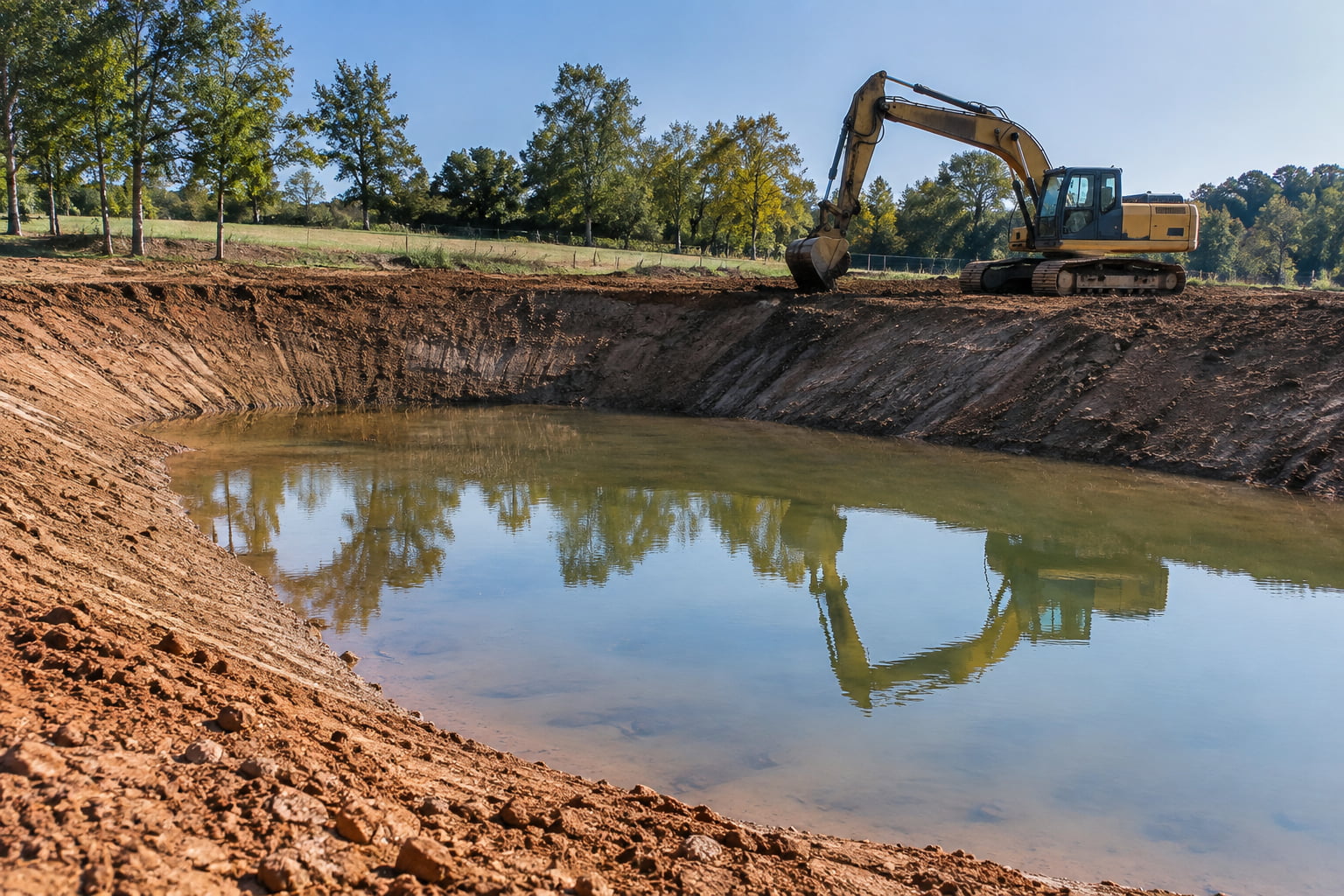
People usually call about a pond because they want fish, a place for runoff to collect, or just something nice to look at from the porch. Whatever the reason, the holes that hold water are the ones dug with a plan.
Depth and shape
A pond needs to be deep enough that it doesn't turn into a warm, weedy puddle by midsummer. For fish, aim for at least 8 to 10 feet in the deepest spot. Shallow shelves around the edge let plants and frogs get established. Gentle side slopes, roughly 3:1, keep the banks from washing out and make it safer if kids or animals wander in.
Clay and water loss
Northern Illinois clay is good news for ponds. A solid clay layer holds water with little or no liner. If the subsoil is sandy or gravelly, water will seep out, and we may need to add a compacted clay liner or a synthetic liner. Pull a few test holes before you commit to a size. It costs far less to find the leak on paper than after the pond is full.
Inlet, outlet, and the spillway
Every pond needs a way for extra water to leave without taking the dam with it. We cut a spillway at a set elevation and armor it with stone so heavy rain doesn't scour a channel. If the pond is fed by a drainage ditch or field tile, we size the inlet to match, and we check that the outlet can handle a storm, not just a normal week.
For typical residential and small farm ponds we charge by the yard of material moved, plus the cost of stone for the spillway and any liner. Ask us for a quote after we've seen the site, because the soil and access determine most of the price.
If you're thinking about a pond, stop by the yard at 1383 Bungalow Rd or call and we'll walk the property with you.